The Premier League carries on despite new Coronavirus restrictions

SKY.jpg

When COVID-19 first became a global pandemic, soccer leagues throughout the world shut down (except of course for Belarus and Burundi, seriously). Many of these leagues returned to action over the summer, including the English Premier League.

The numbers in the UK are currently out of control and the entire UK is currently on lockdown. The headline from Wednesday, January 13th reported that the UK had recorded its highest daily deaths since the pandemic started.

Despite strict rules that have been in place, there have been many COVID outbreaks at a number of Premier League clubs. There have also been way too many reports of players flagrantly breaking the rules about social gathering and travelling.

The most recent outbreak is with Aston Villa where 10 players and four staff members tested positive and were forced in to self isolation.

Last week the league issued strict warnings to the league’s clubs and players about on field celebrations. This included no hugging, high fives or handshakes.

_116492964_sheffield_manchester_everton_getty.jpg

Over the weekend, players at several clubs, Sheffield United, Manchester United and Everton, ignored these warnings during matches and did their usual celebrations.

Today the British government has put out further warnings telling the players they must follow the coronavirus rules.

The announcement was put out by Sports Minister Nigel Huddleston. In a Twitter post, he said 'Everyone in the country has had to change the way they interact with people and ways of working. Footballers are no exception. Covid secure guidelines exist for football. Footballers must follow them and football authorities enforce them - strictly.'

Many managers have expressed concern that it will be difficult to control the on field actions of their players. At the same time, referees will be asked to remind players of their responsibilities.

There have been calls for the league to shut down again, but government officials want to avoid this. English football is one of the only things currently available to people to watch live on television and people are currently prohibited from doing much else. Soccer is the national pass time and provides the people with a form of sport entertainment.

The new restrictions include mask wearing at all times in indoor areas at the training ground, the use of three buses when travelling to ensure social distancing, limited physio treatment at training grounds and restricting indoor meetings.

What are your thoughts on the continuation of the English Premier League while COVID cases have risen in the UK? Should the league be shut down? Should players that break the rules by socializing in large groups be punished?

Let us know what you think.


Girls United Football Association and women's equality in soccer

D2CPVwfXQAES0pV.jpg

US based soccer fans know that the best representatives of American soccer on the international stage are the members of the United States Women’s National Team. The women have had far more success on the global stage than their male counterparts. In fact, the USWNT is the most successful in international women's soccer, winning four Women's World Cup titles (including the first Women's World Cup in 1991), four Olympic gold medals (including the first Olympic women's soccer tournament in 1996), and eight CONCACAF Gold Cups.

Despite the women’s accomplishments, they are still fighting for equal pay. In March of 2019 the USWNT filed a lawsuit against the U.S. Soccer Federation. The suit alleges that the USSF engages in "institutionalized gender discrimination" toward the team. The discrimination "has caused, contributed to, and perpetuated gender-based pay disparities" against the players in "nearly every aspect of their employment," the lawsuit reads.

0.png

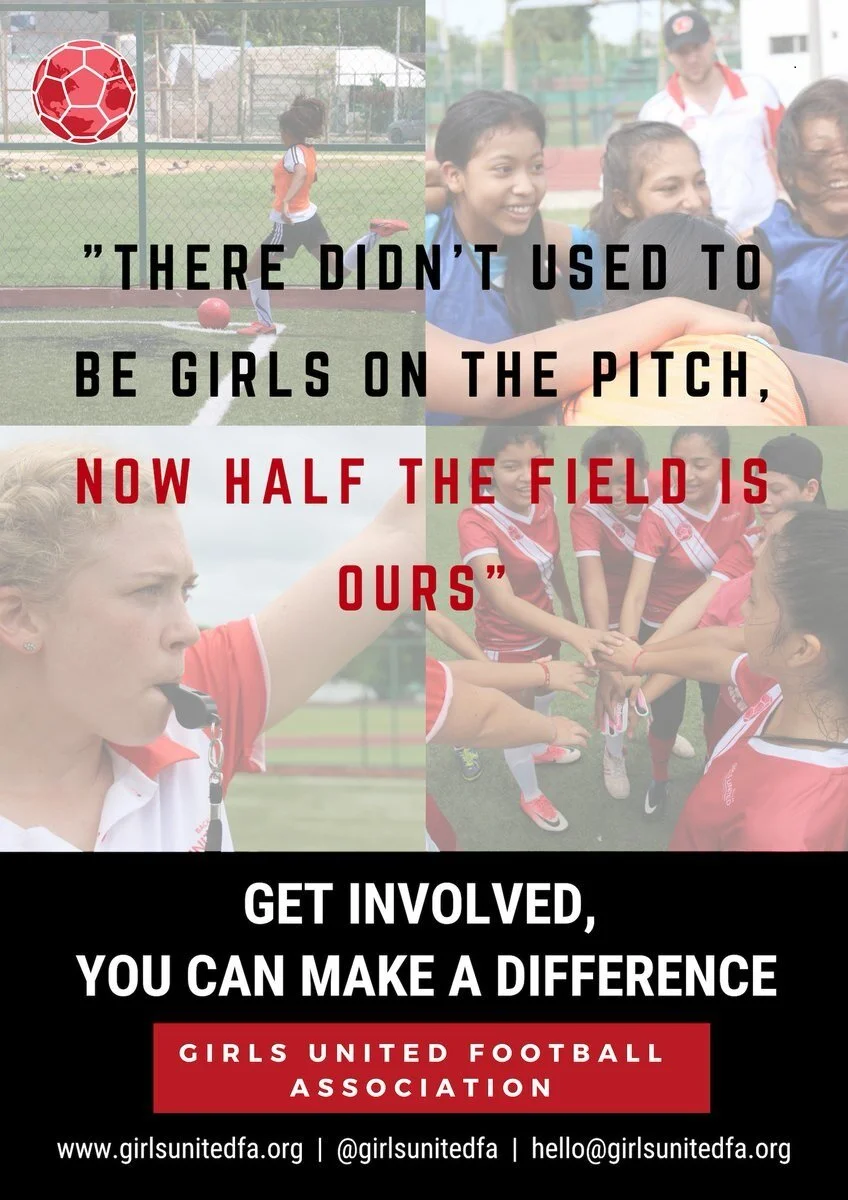
As the women’ national team continues its fight for equality, the fight is continuing at the grassroots level as well. An example is Girls United Football Association. GUFA is a nonprofit organization that provides girls an opportunity to play soccer and learn life skills. Part of the organization’s mission is to promote gender equality in sport and life.

Girls United FA uses sport as a tool for social impact by setting up football academies for girls, workshops and coaching courses, in low-income areas internationally. Its first club began operating in March 2017 in Bacalar, Mexico. They have since opened in London and are preparing to enter the US market soon.

download.jpg

As the organization continues to grow, donors and sponsors are always welcome as well as the opportunity to participate in events and fundraisers that promote women’s sport and inclusion.


New York's Cosmopolitan Soccer League began life as the German American Soccer League

Cosmopolitan_Soccer_League_Logo.png

Today’s Cosmopolitan Soccer League was established in 1923 in New York City as the German American Soccer League. It is one of the country’s oldest soccer leagues with over 90 years of history behind it. What was once a German inspired collection of teams in the beginning has over the decades evolved into a truly cosmopolitan refection of the metropolitan area’s demographics.

When the league first started it was made up of five teams, S.C. New York, Wiener Sports Club, D.S.C. Brooklyn, Hoboken FC 1912 and Newark S.C. The teams were largely composed of recent immigrants from Central Europe, primarily Germany. The next year, four more teams, Swiss F.C., Elizabeth S.C., S.C. Eintracht and Germania S.C., joined the league. The league renamed itself the German American Football Association in 1927.

Following the end of World War II, the league experienced major growth as Central European players left their homelands to move to the United States. Many of these new immigrants were Hungarians that had fled their country following the 1956 Hungarian Revolution.

Current Cosmopolitan Soccer League champions NY Pancyprian Freedoms

Current Cosmopolitan Soccer League champions NY Pancyprian Freedoms

In 1977, the GASL changed its name in response to a changing American soccer scene. While soccer had existed as an ethnic sport since the 1930s, the creation of the North American Soccer League in 1968 had brought the sport into the mainstream. Recognizing that maintaining its ethnic identity would hinder its acceptance by the wider U.S. sports culture, the GASL governing board voted to rename the league the Cosmopolitan Soccer League. As part of this process, the league’s teams were directed to change their names to ones with less ethnic connotations, although this requirement was dropped three years later.

Current Cosmopolitan Soccer League leaders Shamrock SC

Current Cosmopolitan Soccer League leaders Shamrock SC

The league plays a traditional international schedule with competition beginning the second weekend of September and running through June, with a winter break from the middle of December to early or middle March. During the winter months, the league runs an indoor tournament due to New York's cold climate.

There are 106 clubs in the CSL’s 9 divisions today, conveying the New York metropolitan area. This number includes the reserve teams that First Division as well as the teams in the Over 30 Division.


Football pays tribute to Diego Maradona

Enr1nupWEAI0eOr.jpg

The founders of Soccer Walks NYC are supporters of London’s Arsenal Football Club. The news of Diego Maradona’s passing at the age of 60 has shocked the world of soccer. Tributes have been coming in from all over the world including those from Arsenal. Here is just a sampling of the thoughts and memories for the legendary Argentinian from the football worlds as well as Arsenal players past and present.

Embed Block
Add an embed URL or code. Learn more

The First American Soccer League

The first American Soccer League was formed on July 7,  1921 at the Hotel Astor in New York

The first American Soccer League was formed on July 7, 1921 at the Hotel Astor in New York

It has taken soccer a long time to become a popular sport in the United States. Currently Major League Soccer has 26 teams and will increase to 30 cubs by 2023.

What a lot of people don’t realize is that soccer almost took off in the 1920’s. There was a major surge in the sport’s popularity in the New York City/New Jersey region with the birth of the American Soccer League in 1921. It was the first fully professional soccer league in the United States. The ASL was formed on July 7, 1921 at the Astor Hotel with eight clubs, including the Jersey City Celtics, Todd Shipyards of Brooklyn, Bethlehem Steel, Fall River Marksmen, Harrison Field Club, Holyoke Falcons, New York Field Club, J&P Coats.

American_Soccer_League_(1933–83).png

The league was an immediate success, drawing greater crowds than any previous circuits.

As the league grew, the ASL drew its teams from big cities and industrial towns (the Boston Wonder Workers, the Brooklyn Wanderers, New York Field Club, the Paterson Silk Sox, the New Bedford Whalers, the Bridgeport Bears).

Businesses sponsored and ran their own teams, So instead of team names such as the Bears or Giants, matches might feature clubs such as Indiana Flooring vs. J&P Coats!

Clubs affiliated with American industry had a significant advantage over those from abroad as business was booming in the United States. The American clubs were able to pay much higher wages than their European counterparts. This was a time when nobody actually made a living exclusively from playing soccer. These US companies were able to offer both the chance to play soccer and a high paying industrial job.

The Brooklyn Wanderers of the American Soccer League

The Brooklyn Wanderers of the American Soccer League

ASL game attendance averaged around 6,000 for games in the New York region and 8,000 to 10,000 for major games in New England.

The original American Soccer League, operating between 1921 and 1933.

The league’s first secretary was Thomas Cahill. ·Cahill is considered one of the founders of soccer in America. He was born in NYC to Irish immigrants and attended college in St. Louis. It was here that he fell in love with soccer. (St. Louis was an early outpost of soccer in the United States). Cahill helped grow the game in the Midwest before moving back east. Cahill established a national governing body for soccer, the US Football Association in 2013. Soon after the US joined FIFA.

Thomas Cahill

Thomas Cahill

Cahill became the first manager of the US national team in 1916 and toured Scandinavia with the team.

As the ASL took off, American teams started luring players from some of the top clubs in Europe. Before long, there were 50 European internationals playing in the American league.

The ASL clubs’ recruitment tactics frequently ran afoul of international contract protocols, provoking an outcry on the far side of the Atlantic. Hart to believe this now, but in 1925, the Scottish Football Association convened a special meeting in Glasgow to grumble over the “American menace.” ASL representatives were made to attend a FIFA hearing in Finland in 1927.. The ASL was told to stop stop ignoring international contracts and stop poaching European players.

The ASL was done in by political infighting and eventually the depression hit and the first American Soccer League collapsed.

A New York based player scored the goal that gave the United States a 1-0 victory over England in 1950


Gaet.jpg

One of the most famous victories in United States soccer history took place during the summer of 1950 in Belo Horizonte, Brazil. The setting was the World Cup, and the United States was scheduled to take on England during the group stages.

With no existing professional league, the U.S. team was made up of part-time players and included a number of new immigrants. At the time, the city of St. Louis was a hot spot for soccer in the country and a large number of team USA came from the St. Louis area.

England and the United States drawn into group 2 along with Spain and Chile. England won their first match 2-0 over Chile, while the US was easily beaten by Spain 3–1 to Spain.

To say that England were the favorites would be an understatement. They were considered one of the best teams in the world, while the U.S. came into the match with no pedigree.

The American team included high school teacher Walter Bahr, funeral home worker Frank Borghi. Ben McLaughlin was supposed to be a member of the team but was unable to head to the tournament as he couldn’t get time off from work.

The team was so haphazardly put together that it only had time to train together once before heading off for Brazil.

gm9iwowegqxioayyhjyw.jpg

As expected, England dominated possession and shots on goal, but the match remained scoreless until the 37th minute. A Bahr shot from distance was met by the head of Haitian born New Yorker Joe Gaetjens and sent to the back of the England net.

The quality of U.S. play improved as they maintained their lead in the second half. The team’s confidence increased as the minutes ticked away. Against all odds the U.S. kept England off the scoreboard and the Americans walked away with a famous victory.

Somewhat lost in the win is the story of goal scorer Gaetjens. The forward was born in Haiti and came to New York City in 1947 to study accounting at Columbia University. While attending school, Gaetjens played three seasons for Brookhattan of the American Soccer League.

Here’s a shocker. While today’s superstar players earn incredible salaries, Gaetjeans made $25 a game while also attending college and working for the Brookhattan owner's restaurant.

After the World Cup, Gaetjens left New York for France where he played for Division 1 side Racing Club Paris and Division 2 club Olympique Ales.


He later returned to Haiti where he spent the rest of his life.

NINTCHDBPICT000069347355.jpg

If you’re interested in learning more about this match, there’s a book and a film entitled, The Game of Their Lives.


Let the Elephant Soccer Club of Harlem play

22552607_1268494049923537_5254735945322358452_n.jpg

I recently came across a story about the Elephant Soccer Club of Harlem and how they had been told to vacate a local park they have been using for 15 years. I couldn’t believe what I was reading.

I wasn’t familiar with the organization but the Elephant Soccer Club hosts training clinics for kids 3-18. The club was started by former player Adama Fofana, originally from the Ivory Coast, back in 2005. Morningside Park is the location where practices are held during the spring, summer and fall. Activities move inside during the winter months. The club’s philosophy as stated on its website is ‘One Game One Family.’

It was reported that on October 3rd, park rangers approached coach Adam Norse and issued him a summons for “unauthorized use of the field”. Keep in mind that the Elephant Soccer Club has been using the fields in Morningside Park for 15 years.

Club captain Joe Lupton believes that this sudden change is politically motivated. The Elephant’s staff had complained to the parks department about screws remaining scattered across the playing fields following an event held in the park. In the Post article Lupton stated, “Ever since we started complaining about the screws on the field, the positive relationship that had existed for 15 years began to get more antagonistic.”

14138870_918169461622666_1109928493588653380_o.jpg

The event in question is the Harlem Eat-Up food festival that takes place for two weeks every summer in the park. It does seem strange that the Elephant’s are being punished simply for asking to have a safe playing field for kids.

The soccer club is scheduled to meet with the Parks Department Oct. 19 to discuss use of the park’s fields. Meanwhile park’s department spokeswoman Crystal Howard issued the following statement,

Throughout the city, we prioritize youth play on our fields. We are working with the Elephant Soccer Club to find them a field built for soccer so their young strikers can run the pitch.

Lupton believes that the Elephant’s are being singled out and claims that other soccer teams use the fields freely.

The thing that makes this story so troubling is that the real losers are the kids. There’s not a lot of open green space for soccer to be played in the city; especially uptown. The fact that the kids of the Elephant Soccer Club are being booted because of politics is ridiculous.

Hey New York City Parks Department, cut it out and let the kids play!

13321941_863243700448576_163827672750320385_n.jpg


Soccer is thriving in Manhattan at Pier 40

6a00e54eea3d1c88340167671052b6970b-800wi.jpg

The borough of Manhattan is a concrete jungle which makes finding a place to play soccer difficult. There are parks and fields within the city where games are played, but at the present time, one of the best spots has is at Pier 40 along the Hudson River.

Looking at Pier 40 from the outside, you wouldn’t suspect that this was the home to numerous leagues and clubs throughout the city. That’s because Pier 40 was built in 1962 for the Holland America Cruise Line. The complex also includes a large public parking lot which is what you see when looking at the facility from street level.

Inside Pier 40 it’s a different story. The rooftop and lower courtyard areas are covered with artificial turf and are used for both youth and adult soccer leagues. It’s estimated that over 200,000 people use the fields each year. The area is also used for recreational summer camps and year round instructional programs.

One league that calls Pier 40 Home is Downtown United Soccer Club. They recently announced the kick off to their new season with a tribute to Pier 40:

Pier 40 does have its problems, however. The building is an eyesore and is falling apart in some areas. For these reasons Pier 40 For All has been created by members of the community and those that use the fields at Pier 40. It’s mission states:

Pier 40 For All is a coalition for neighbors and community groups who are working together to make sure that as Hudson River Park is finished, Pier 40 is transformed into a beautiful, environmentally conscious space that fits the needs of our local community, expands and improves our sports fields, and supports the park with appropriately scaled commercial uses.

We’ll follow any developments on the future of soccer at Pier 40.

dusc-players.jpg


Fans are allowed back in Japan but with restrictions

00japan-soccer-videopromo-mobileMasterAt3x-v2.jpg

Sports fans have been putting up with what is now known as “the new normal” for six months and counting.

The good news is that sports have returned but without fans and without the normal atmosphere that a full stadium brings to a match. Instead cardboard cut outs and piped in crowd noises have become the norm for fans watching from home.

Even better news is that some leagues and teams in various sports have begun to allow fans back into stadiums. One example is Japan’s top flight soccer league, the J-League

Like leagues throughout the world, the J-League suspended play in March. Matches were allowed to begin again on June 27th. There have been isolated cases of players testing positive, but the league has carried on.

The government decided to start allowing fans to return in early July with a limit of up to 5,000 fans per match. There are also restrictions on what those in attendance can do. Alcohol sales are prohibited which is not surprising. What is interesting is that initially clapping, chanting, cheering, singing, and drumming were not allowed. (Recently the league decided that clapping would be allowed as it is low risk for spreading the virus and will now be allowed.)

In a recent New York Times article here’s what the writer observed at a recent F.C. Tokyo home match:

  • When the fans applauded a great play it made the match feel more like a symphony concert than a soccer game.

  • Everyone that attended the match had to have a temperature check prior to entering the stadium.

  • Throughout the stadium there were markers on the ground reminding fans to social distance when lining up to buy food or souvenirs.

  • Every other row in the stadium was kept empty and each ticketed spectator had two empty seats to their right and to their left (this included people from the same family).

  • The area of the stands usually filled with away fans was totally empty.

  • Those in attendance had to provide their names and contact information for contact tracing purposes.

The J-League is going to reevaluate its policy on fan attendance at the end of September to see if more fans will be allowed to return to matches.

KCM_SKCvHOU082520JAT054F.jpg

Here in the states Dallas, Sporting Kansas City, Orlando City SC and Real Salt Lake have received permission from local governments to allow a limited amount of fans in to their stadiums..

Sporting KC CEO Jake Reid was asked whether it was worth it to open the stadium for a small number of spectators. His reply was, "Finances aren't driving much of major league sports at this point." It appears the real priority is trying to restore some sense of normalcy to the games.

Hopefully we’ll be able to return to a “real normal” in the near future. In the meantime it’s a strange scene inside soccer stadiums throughout the world.

What do you think about the current state of things with regards to fan attendance?

Soccer continues to grow in the New York City area

IMG_0934.jpg

Soccer Walks NYC is all about soccer and the history of the game in the New York City area. Therefore, we were thrilled to learn about two clubs that have recently launched in the tri-state area; Queensboro FC and NJ Teamster FC out of Bayonne, New Jersey.

Queens is the most ethnically diverse borough in New York and some say, even the world. Combined with the fact that soccer is the planet’s most popular sport, it makes sense that the game is extremely popular with local residents. Take a walk through Flushing Meadows Park on a sunny day and you will see adults and kids either playing the game or just kicking a ball.

Based on this combination of facts, it makes sense that Queens will be the home of a new USL Championship team. (the USL Championship is sanctioned by the United States Soccer Federation as a Division II Professional League which places it under Major League Soccer in the US soccer pyramid.

Queensboro FC also has star power behind it. The team was established by an investment group that includes former Barcelona and Spanish World Cup winner David Villa. Villa spent four years in New York in the latter stages of his career with NYCFC. During this time, the Spaniard fell in love with New York.

Queesboro-FC-USL-Championship.jpg

When the new was announced last fall Villa said,

Bringing professional football to Queens' diverse community is an exciting and unique opportunity. The beautiful game already lives here, thanks to the melting pot of cultures who are so passionate about the sport. I can't think of a better place for QBFC to grow. I'm proud to be part of this project.

In terms of building the team, Villa said, "We will recruit the best players in Queens as we become the home team. Our goal is to have as many Queens-bred players as possible."

download (1).jpg

New Jersey Teamsters FC is based in Bayonne, New Jersey and are scheduled to being play in 2021 as part of the National Independent Soccer Association play in the National Independent Soccer Association, the third tier of American Soccer.

The Teamsters started out in 2017 as a member of the United Premier Soccer League (a development league.) The idea for the club came from Sibrena and Alex Geraldino.

The Geraldino’s are currently featured as part of the Discovery Channel’s show called I Quit. The show debuted this month and follows six entrepreneurs trying to launch successful new businesses.

The NJ Teamsters FC vision as stated on the club’s website is:

To become a club which will be amongst the leaders in football and entertainment that, through its sporting achievements, fulfills the expectations of all of its supporters both nationally and internationally and acts with social responsibility and good corporate management.

NJ Teamsters FC call Don Ahern Veterans Memorial Stadium in Bayonne home.

1598574654-list.jpg